~Shriyanshi Shukla
I still remember that day as clear as crystal. I was swamped with work and had hit the kind of burnout that doesn’t come with quick fixes. In times like those, when your eyes are tired of digital windows, when your hands crave something beyond the keyboard, and when your brain demands a detox sesh, the only real answer is nature. The answer was right there in front of me, yet I hesitated to take the much-needed vacation. My overthinking cooked up n-number of scenarios about why I shouldn’t take a break. Ultimately, in a war between reason and emotion, emotion won.
I came back from work, rushing from Kashmiri Gate metro station towards home. Texted in my office group that I’d be unavailable for the next couple of days. Announced to my parents, “I am going on a trip tomorrow.” My brother, who was on the same boat, asked if he could tag along, and lo and behold, the plan was set in motion.
The next morning, braving the Delhi humidity, we boarded our train to Pathankot. Our destination? The Switzerland of India, Khajjiar. While Dalhousie was on the itinerary, it was Khajjiar I was most excited about. I had visited as a three-year-old and had no memory of the place, no matter how much my parents tried to jog it with pictures.
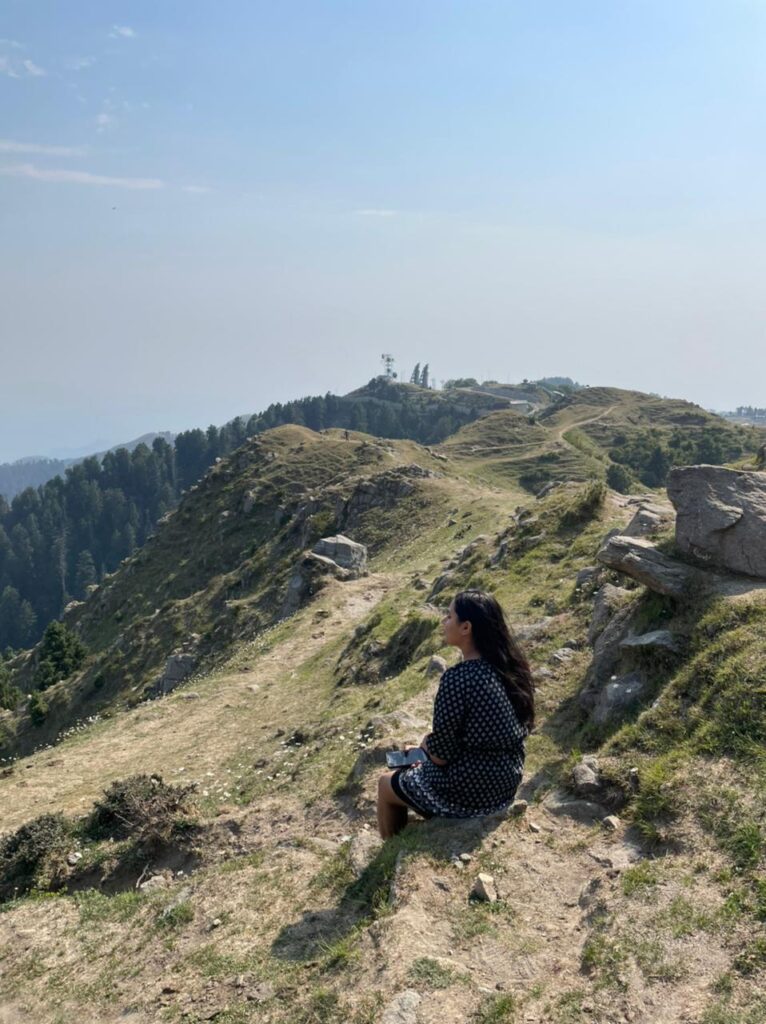
After a strenuous bus journey from Pathankot, we reached Banikhet. This is where things got interesting. While my brother preferred chilling at the hotel, I slung my tote bag on my shoulder, packed with all my travel essentials, and headed out with no agenda except to walk. I’ve always believed there’s a certain philosophy to wandering on foot. The French even have a word for it: flâneur, or flâneuse in my case, someone who explores a place by walking with no fixed goal except to observe.
And that exists because of something deeply human. We’re wired to notice things. It’s in us to be aware of our surroundings, spot anomalies, point out similarities and then reflect on our own existence. So I took the local pahadi lanes of Banikhet, trying to find a viewpoint to look at the valley and the mountains, but in that pursuit I stumbled upon things the eye could easily miss without the art of walking. While wandering through the main market, I came across a cute dog who gave me company the whole way, in exchange for just a few dog biscuits.
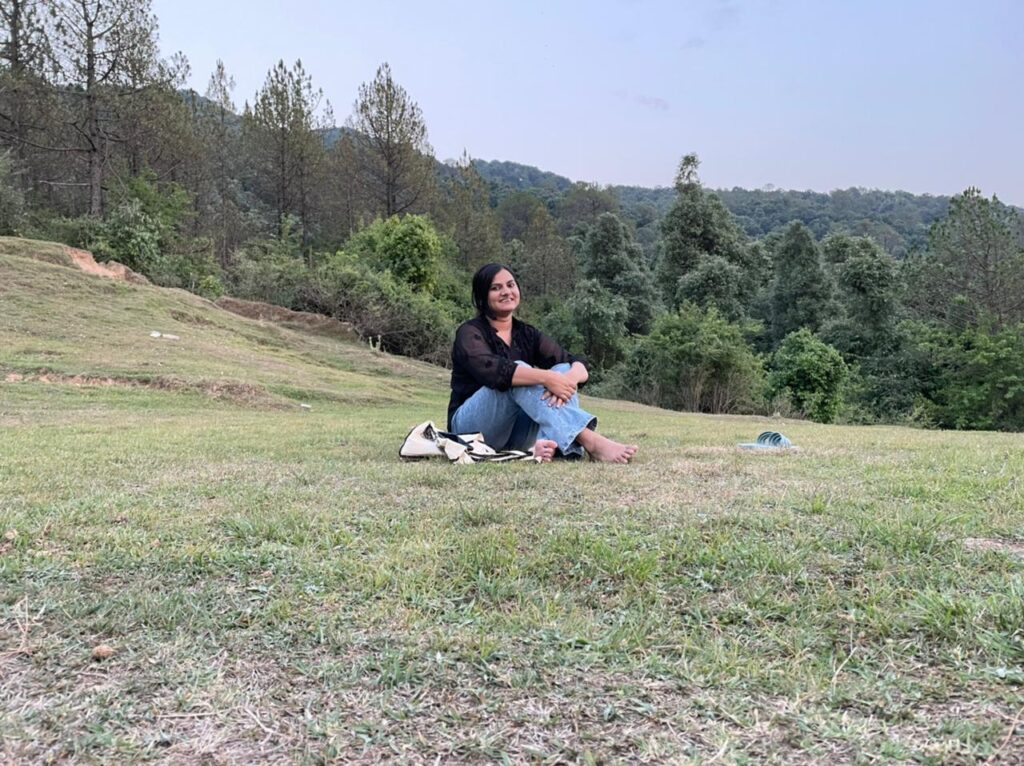
While taking a turn on a road that led to Chamba, with dense forest on both sides, I saw a spectacular view waiting for me. And right at the end, there was a wedding procession going on. I couldn’t help but marvel at the difference in cultures, yet the sameness. The rituals were different, but the idea of marriage, the idea of community and the idea of happiness were the same.
On my walk, I asked people around about the best place to watch the sunset. They suggested walking up to the helipad—a seemingly restricted area that was actually filled with people who’d come for the views. The sunset, the vast expanse of grassland and a small fox I spotted on the way back made nature feel like it was at its peak. The real thinking happened later, when I was lying on my bed, gazing at the star-filled sky outside my window. It made me realize that cities liberate, but they also cage. The smog-filled sky had never looked as dull as it did in comparison to this beauty. Just like the sky in front of me, my mind was now clear, free of clutter.
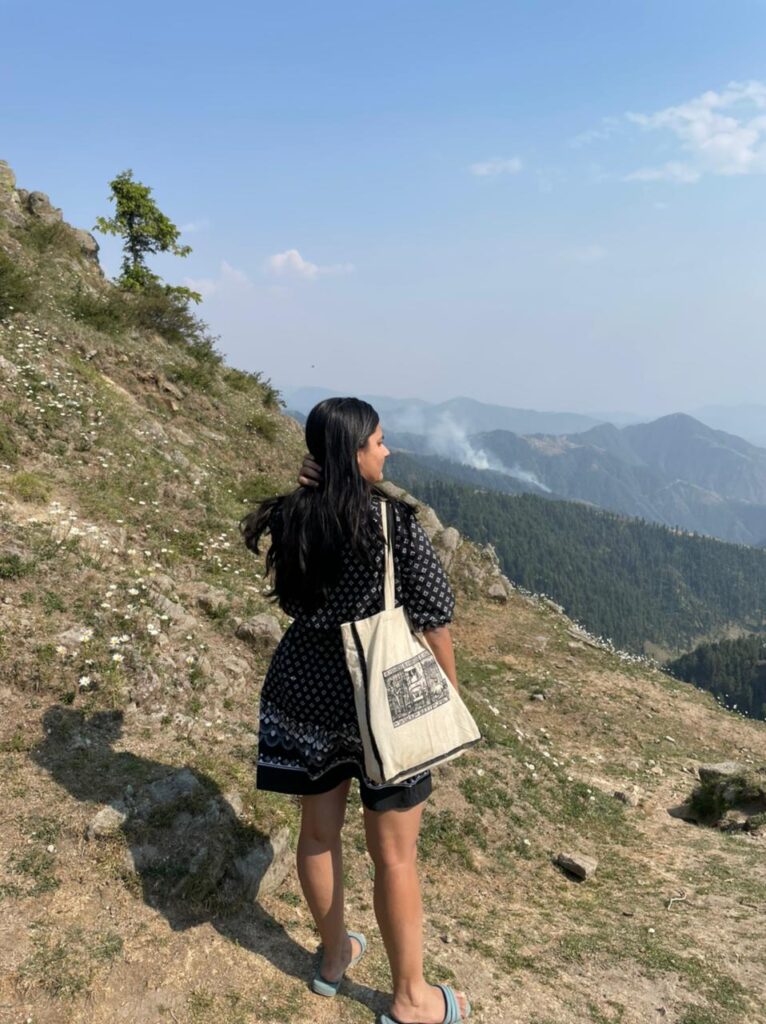
The events of the day, all the observations around me, made me reflect on my own worth in the scheme of the universe. It made me realize how minuscule my thoughts are compared to the grander things. Yet, I am still a vital part of this beautiful world. I returned two days later, with this walk becoming my core memory more than Khajjiar itself.
This trip, like many others, helped me declutter my mind, understand not just others but even myself, and truly see how travel positively affects mental health.